
Asian massage for pain relief draws on thousands of years of traditional healing wisdom to target pain at its source through pressure, movement, and energy work. If you’ve been dealing with persistent aches, stiffness, or tension that just won’t budge, these time-tested techniques offer something modern pain management often misses.
What Is Asian Massage and How Does It Relieve Pain?
Asian massage is a broad term that covers several distinct therapeutic traditions originating across East and Southeast Asia, including Chinese, Thai, Japanese, and Korean practices. What they share is a foundational belief that pain and tension arise when circulation, energy, or structural balance is disrupted, and that hands-on bodywork can restore it.
Each style has its own techniques and philosophy, but all of them work on the body’s soft tissue, circulation, and nervous system in ways that are now supported by modern research. Studies on acupressure and therapeutic massage consistently show reductions in pain intensity, muscle tension, and stress hormones in people who receive regular sessions.
Asian massage approaches pain from the outside in. Rather than masking symptoms with medication, the hands-on work addresses the underlying tightness, restricted circulation, or postural imbalances that create pain in the first place. That’s what makes it a genuinely complementary option alongside other forms of care.
Key Asian Massage Styles and Their Pain-Relief Focus
| Style | Origin | Technique | Best For |
|---|---|---|---|
| Thai Massage | Thailand | Assisted stretching + acupressure | Full-body tension, flexibility, back pain |
| Tui Na | China | Deep kneading + joint mobilization | Chronic pain, joint stiffness, sports injuries |
| Shiatsu | Japan | Finger pressure on meridian points | Headaches, neck pain, stress-related tension |
| Acupressure | China | Sustained pressure on specific points | Localized pain, energy blockages, migraines |
| Korean Massage | Korea | Stretching + pressure point work | Back pain, overall tension, circulation |
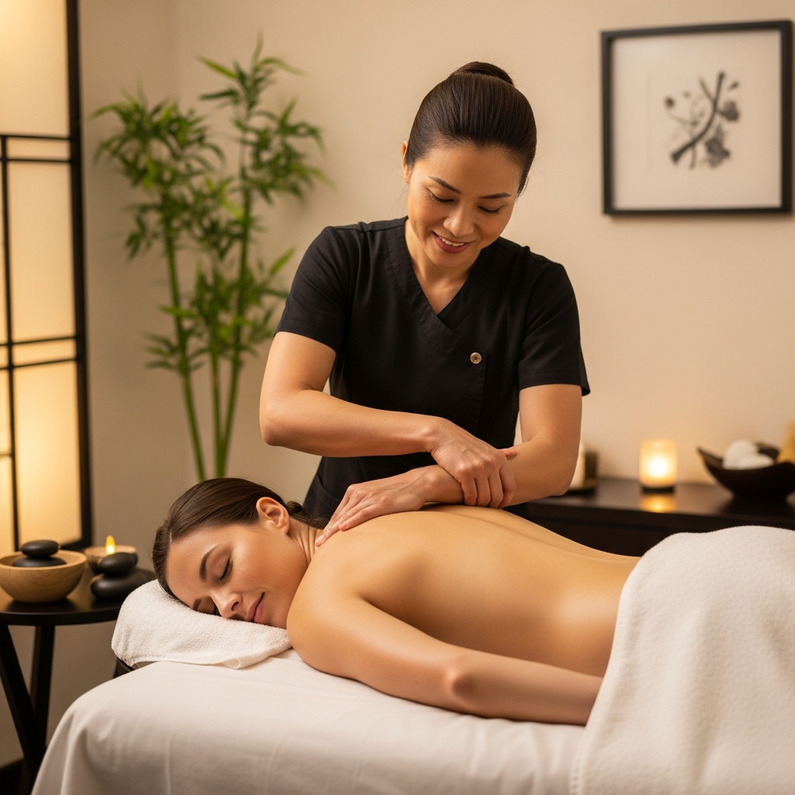
The Most Common Types of Pain Asian Massage Addresses
Asian massage for pain relief covers a wide range of conditions, and knowing which style fits your specific pain helps you get the most from your session.
Back and Lower Back Pain
Lower back pain is one of the most common reasons people seek out massage therapy, and Asian bodywork has a strong track record here. Thai massage in particular uses a combination of hip stretches, spinal decompression moves, and targeted pressure along the back muscles that can provide relief that lasts well beyond the session itself. Tui Na, the Chinese manual therapy style, also works well for lower back issues by addressing both the muscles and the joints involved in back pain.
Neck and Shoulder Tension
Neck and shoulder tension often builds slowly through poor posture, stress, or long hours at a screen. Shiatsu and acupressure are particularly effective for this type of pain because they work along the meridian lines that run through the neck and shoulders, releasing tension at specific pressure points that can be hard to access with general massage strokes. If neck pain is something you deal with regularly, check out this deeper look at
If neck pain is something you deal with regularly, this deeper look at Asian massage for neck tension covers exactly what to expect from treatment.
Headaches and Migraines
Tension headaches that originate in the neck and upper back respond well to acupressure and Shiatsu. Therapists trained in these styles know specific points on the head, neck, and hands that can interrupt a tension headache in progress and reduce the frequency of future episodes when treated regularly.
Joint Pain and Stiffness
Tui Na and Korean massage both incorporate joint mobilization techniques that help restore range of motion in stiff or painful joints. For people dealing with conditions like arthritis or repetitive strain injuries, these styles offer targeted work that addresses both the joint itself and the surrounding soft tissue.
How Asian Massage Techniques Work on Pain
The pain-relieving effects of Asian massage aren’t just anecdotal. Several well-documented physiological mechanisms explain why these techniques work.
Pressure on specific points triggers the release of endorphins, your body’s natural pain-relieving chemicals. This is the same mechanism behind acupuncture, and acupressure achieves a similar effect without needles. When a therapist holds firm pressure on a tender point, the initial discomfort gives way to a release that often comes with a noticeable drop in the surrounding pain level.
Stretching and compression increase blood flow to areas that are often chronically undercirculated in people with desk jobs or sedentary lifestyles. Better circulation means more oxygen and nutrients reaching the muscle tissue and more efficient removal of the metabolic waste that builds up in tight, overworked muscles.
The slow, intentional rhythm of most Asian massage styles also activates the parasympathetic nervous system, pulling you out of the fight-or-flight state that chronic stress keeps most people locked in. When your nervous system downregulates, your muscles physically relax at a deeper level than they can achieve through conscious effort alone.
Want to understand the full range of benefits? The post on Asian massage benefits breaks down what regular sessions can do for your body over time.
What to Expect During Your First Asian Massage for Pain Relief
Your first session starts with a brief intake conversation. Your therapist will ask about where you’re experiencing pain, how long you’ve had it, and whether there are any health conditions or injuries they need to know about. Be honest and thorough here since this shapes the entire session.
Depending on the style, you may stay fully clothed (Thai massage, Shiatsu) or undress to your comfort level on a table (Tui Na, acupressure-based styles). Either way, you’re covered appropriately and your modesty is respected throughout.
The therapist works through a sequence that addresses your whole body while paying extra attention to the areas you’ve flagged. Pressure levels range from gentle to firm, and you can always ask for adjustments. A good therapist wants your feedback, not your silence through discomfort.
After your session, drink plenty of water. You might feel a pleasant tiredness for a few hours as your body integrates the work. Some mild muscle soreness is normal after your first session, particularly if you carry significant tension. Most people feel noticeably better within 24 hours.
How to Choose the Right Style for Your Pain
| Your Pain Type | Recommended Style | Why It Works |
|---|---|---|
| Lower back tightness | Thai Massage or Tui Na | Hip stretches and spinal work decompress the lumbar area |
| Neck and shoulder knots | Shiatsu or Acupressure | Meridian point work releases deep tension in the upper body |
| Tension headaches | Shiatsu or Acupressure | Specific head and neck points interrupt pain patterns |
| Joint stiffness | Tui Na or Korean Massage | Joint mobilization restores range of motion alongside soft tissue work |
| Full-body fatigue and aching | Thai Massage | Head-to-toe stretch sequence resets the whole musculoskeletal system |
| Stress-related pain | Any style with slow, rhythmic work | Parasympathetic activation reduces cortisol and muscle guarding |
How Often Should You Get Asian Massage for Pain Relief?
Frequency depends on what you’re treating. For acute pain following an injury or flare-up, more frequent sessions in the short term, such as once or twice a week for three to four weeks, can help you make faster progress. For ongoing, chronic conditions, a bi-weekly or monthly maintenance schedule tends to work well for most people.
One session can bring noticeable relief, but the most meaningful and lasting results tend to build over a series of appointments. Each session picks up where the last one left off, addressing deeper layers of tension once the surface tightness has already been worked through.
If you’re using massage as part of a broader pain management plan alongside physical therapy, chiropractic care, or exercise, let all your providers know. Coordinating your care helps each treatment support the others and reduces the risk of working at cross purposes.
You can explore the full range of options available to you by visiting our Massage Services in Prescott Valley page.
Is Asian Massage Safe for Pain Relief?
For most people, yes. Asian massage styles have strong safety profiles when performed by trained therapists who know your health history. That said, there are situations where caution or modifications are needed.
If you’re pregnant, have a blood clotting disorder, active skin infections, open wounds, recent fractures, or severe osteoporosis, check with your doctor before booking. Some conditions require modified techniques or make certain styles temporarily off-limits.
If you’re dealing with nerve pain, numbness, or a condition affecting sensation, be extra communicative with your therapist. You may not feel pressure accurately in affected areas, which means your feedback becomes even more important for keeping the session safe and effective.
The key is always full transparency with your therapist before you begin. A skilled practitioner will adapt their approach to work with your body’s current state, not against it.
Frequently Asked Questions
Asian massage for pain relief isn’t a trend or a luxury. It’s a well-developed system of care that has been helping people move better, hurt less, and feel more like themselves for thousands of years.
At East Asia Massage in Prescott Valley, we bring that tradition to life with skilled, attentive therapists who take your pain seriously. Whether you’re dealing with a stubborn knot, chronic back tension, stress that’s settled into your shoulders, or just a body that needs a proper reset, we have the techniques and the experience to help.
Explore everything we offer at Asian Massage in Prescott Valley and find the session that’s right for your body. Real relief is closer than you think.