
Is Thai massage painful? Not for most people who try it in Prescott, though it does feel more intense than a relaxation massage because of the stretching and compression involved.
What Thai Massage Actually Involves
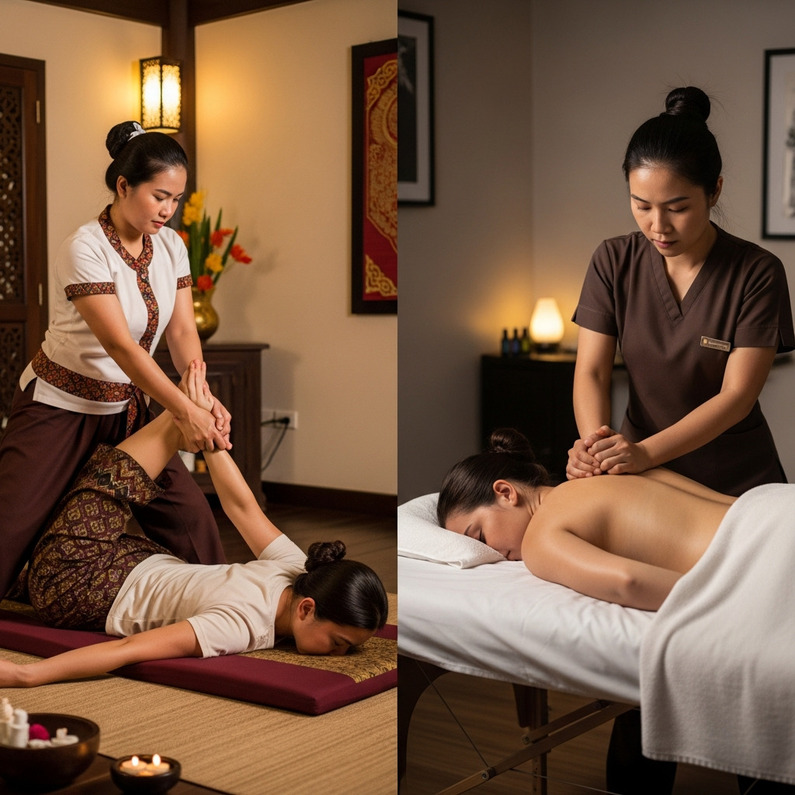
Thai massage isn’t the massage most people picture when they book an appointment. There’s no oil, no undressing, and no table covered in a sheet. You stay fully clothed and lie on a padded mat while your therapist uses their hands, forearms, and body weight to guide you through a mix of assisted stretches, compression, and rhythmic pressure.
No Oil, No Undressing, Just Movement
Because you keep your clothes on, a lot of the nerves that come with a first massage just aren’t part of the picture. Wear something loose and stretchy, like leggings, sweatpants, or athletic wear. Jeans and stiff fabric get in the way once your therapist starts moving your legs and hips through a stretch.
Stretching, Compression, and Rhythmic Pressure
Your therapist works through a sequence that blends three things. Compression is steady palm or forearm pressure walked along a muscle group, similar to what you’d feel in a firm massage. Stretching moves your limbs and spine through ranges of motion you probably don’t hit on your own, which is where most of the “is this supposed to feel like this” questions come from. Rhythmic pressure follows lines along the body, building in waves instead of holding one spot the whole session.
Why Thai Massage Can Feel More Intense Than Swedish or Deep Tissue
If the massages you’ve had before were Swedish, the jump to Thai can feel like a different sport entirely. Swedish uses long, gliding strokes at light to medium pressure. Deep tissue massage works slower and firmer into specific problem spots, but you’re still lying still on a table the whole time. Thai massage moves you. Your therapist is actively stretching your hips, rotating your shoulders, and applying compression while you’re in positions you don’t usually put your body in outside of a yoga class.
So is Thai massage painful because of that intensity? Usually not. It’s just a different kind of pressure than most people expect from a massage, and once you know what’s coming, it stops feeling like anything to brace for.
| Massage Style | Clothing | Pressure Level | Best For |
|---|---|---|---|
| Thai Massage | Fully clothed | Firm, with stretching | Mobility, posture, stiff hips and shoulders |
| Swedish Massage | Undressed, under sheet | Light to medium | Stress relief, first-timers, general relaxation |
| Deep Tissue | Undressed, under sheet | Firm to very firm | Chronic tension, specific knots, post-activity recovery |
Deep tissue and Thai solve some of the same problems from different angles. If your muscles are the main issue, deep tissue digs in directly. If it’s more about stiffness and range of motion, Thai gets you there through movement instead.
What the Different Techniques Actually Feel Like
Thai massage isn’t one sensation start to finish. It shifts between a handful of techniques, each with its own feel and its own job to do.
| Technique | Sensation | Intensity | What It Helps |
|---|---|---|---|
| Assisted Stretching | A slow pull through your hips, hamstrings, or shoulders | Moderate | Tight hips, limited range of motion |
| Palm and Forearm Compression | Steady, walking pressure along a muscle group | Moderate to firm | Sore calves, tense shoulders |
| Joint Rotation | Your therapist gently rotates ankles, wrists, or hips | Light to moderate | Stiffness from sitting or inactivity |
| Rhythmic Line Pressure | Repeated pressure moving along the body in waves | Firm | Full-body tension, an energizing reset |
These techniques get blended together in a single session, not delivered one at a time in a straight line. For a full breakdown of Thai massage alongside the rest of our traditional Asian modalities, our Asian massage in Prescott page covers cupping, reflexology, and hot stone in the same amount of detail.
Who Tends to Find Thai Massage Uncomfortable, and Why
People with very tight hips or hamstrings sometimes feel more during the stretching portion, simply because their body has less room to move before it hits resistance. That’s not the same as pain. It’s more like the pull you feel in a deep stretch you haven’t done in a while, and it eases as your therapist works through it.
First-timers who expected a Swedish massage are the other group who sometimes get caught off guard. If nobody tells you Thai massage involves your therapist moving your limbs and applying real pressure through a stretch, the first few minutes can feel surprising. That surprise usually fades fast once you settle into the rhythm.
How to Make Sure Your Thai Massage Doesn’t Hurt
Communication is the whole trick. Tell us how you feel today before your session starts, mention any old injuries or areas to avoid on your intake form, and say something in the moment if a stretch or compression feels like more than you want. “A little lighter” or “you can go deeper right there” is all it takes, and your therapist adjusts on the spot.
Same-day appointments are common, so you don’t need to plan a Thai massage weeks out to try it. For the full list of what’s bookable at the studio, the massage menu available to Prescott clients covers every style side by side, including Thai, so you can compare before you call.
If you want a longer walkthrough of what a first session at East Asia Massage feels like from intake to the table, our guide on what to expect at your first massage in Prescott Valley covers the intake process and session flow in detail. Most of it applies whether you’re booking solo or with someone else.
What First-Timers Usually Notice Afterward
Most people leave a Thai massage feeling looser and a little taller, not sore in a bad way. Some mild next-day tenderness is normal, especially if your hips or hamstrings were tight going in, similar to how you’d feel after a good stretch session or a light workout. It usually fades within a day.
Thai massage is also a common pick for hikers working through soreness from local trails. If Glassford Hill or another Prescott-area trail is part of your regular routine, our post-hike massage guide breaks down when to book Thai versus deep tissue depending on how your body feels after a climb.
Getting to East Asia Massage From Prescott
East Asia Massage is at 8060 E. State Route 69, Prescott Valley, AZ 86314, a straight shot east on SR-69 from most of Prescott. Courthouse Square and downtown run about 15 to 20 minutes. Prescott Country Club and the Willow Creek area are about 15 minutes. Yavapai Hills is under 10 minutes, and Prescott Lakes runs about 10 to 15 minutes. Parking sits right off the highway with plenty of open spots.
We’re open daily from 9 AM to 9 PM, and same-day appointments are common if today’s the day you want to try Thai massage for the first time. For a wider look at every style we offer and how to pick between them, our full guide to the best massage in Prescott Valley is a good next read.
Frequently Asked Questions From Prescott Clients
So, Is Thai Massage Painful? Here’s What Prescott Clients Should Know Before Booking
The honest answer is that Thai massage feels intense in a good way, not painful the way people sometimes fear before their first session. It’s active, it stretches you further than you’re used to, and it leaves most people looser and calmer than they walked in. If you’re in Prescott and you’ve been curious, tell us how you feel today and we’ll help you decide if Thai is the right pick for your first visit or your fiftieth.
Call (928) 899-1226 to book, or stop by. We’re open daily 9 AM to 9 PM at 8060 E. State Route 69, Prescott Valley, with easy parking right off SR-69.